A cosmetic concern isn’t the only reason to worry about a gap from a missing tooth. They can affect your jaw health, the way you speak, and the way you chew. Gaps in your teeth can change the way your other teeth align and the way your bite fits. This can all happen if it’s not taken care of. The good news is that there are many ways to fix a gap in your mouth. One of the best, most effective, and least expensive ways is a dental bridge. People from all over East Toronto have their smiles transformed at Woodbine Danforth Dental. We prepared this guide based on all our experiences with dental bridges to tell you everything you need to know about the types of bridges, the bridge procedure, the costs, and the expected life of a bridge.
What Is a Dental Bridge?
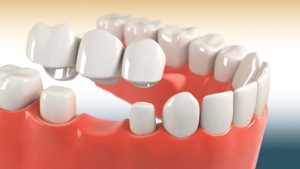
So, what is a dental bridge? It’s a fixed prosthetic — sometimes called a tooth bridge — that “bridges” the gap left by one or more missing teeth. It’s made up of two main parts: the pontic (the artificial replacement tooth) and the crowns or framework that anchor it to the surrounding teeth or implants. Once in place, this fixed dental bridge restores your ability to chew and speak comfortably, keeps your remaining teeth from drifting, and gives you back a confident, natural-looking smile.
Types of Dental Bridges
There are four main types of dental bridges, each suited to different needs.
1. Traditional Dental Bridge
The most common type, a traditional bridge, uses crowns placed on the healthy teeth on either side of the gap, with a pontic in between. It’s a strong, reliable choice when you have natural teeth on both sides of the missing tooth.
2. Cantilever Bridge
A cantilever bridge is anchored on just one side. This option works when there’s only one adjacent tooth available to support the bridge, though it’s typically used for areas with lower biting pressure.
3. Maryland (Resin-Bonded) Bridge
A Maryland bridge uses a metal or porcelain framework bonded to the backs of adjacent teeth. Because it requires minimal reshaping of your natural teeth, it’s a more conservative option — ideal for replacing front teeth.
4. Implant-Supported Bridge
Instead of relying on natural teeth, an implant-supported bridge is anchored by dental implants. It’s the most durable and stable option, especially when replacing several missing teeth in a row, and it helps preserve jawbone health.
It’s worth noting that a bridge is a fixed solution — unlike a removable dental bridge or partial denture, it stays permanently in place.
Dental Bridge Cost: What to Expect
The dental bridge cost varies depending on the type of bridge, the materials used, the number of teeth being replaced, and the complexity of your case. Traditional and cantilever bridges tend to be more affordable upfront, while implant-supported bridges cost more but offer greater longevity.
If you’re comparing the dental bridge cost in Ontario or across Canada, keep in mind that prices differ by clinic and region. Many patients ask about the dental bridge cost without insurance — while a tooth bridge cost can seem significant on its own, most dental insurance plans contribute toward treatment. At Woodbine Danforth Dental, we offer transparent pricing and flexible financing, and every treatment plan includes a clear, written estimate before any work begins.
The Dental Bridge Procedure: Step-by-Step
Curious about what to expect? Here’s how the dental bridge procedure works at our clinic.
Step 1 — Consultation and Exam
We start with a thorough exam and X-rays to assess your surrounding teeth and gums and confirm a bridge is right for you.
Step 2 — Tooth Preparation
For a traditional bridge, the abutment teeth on either side of the gap are gently reshaped to make room for supporting crowns.
Step 3 — Impressions and Temporary Bridge
We take digital impressions of your teeth to craft a custom bridge and fit you with a temporary bridge to protect the area in the meantime.
Step 4 — Fitting the Permanent Bridge
Once your custom bridge is ready, we place it, check your bite, make any adjustments, and bond it securely into position.
Step 5 — Follow-Up and Aftercare
A final check ensures everything feels comfortable, and we’ll walk you through how to care for your new bridge.
How Long Do Dental Bridges Last?
With proper care, dental bridges last 5 to 15 years or more. Several factors influence their lifespan, including your oral hygiene, the materials used, and habits like teeth grinding. To get the most out of your bridge:
- Brush twice a day and floss daily, including under the bridge
- Avoid chewing hard objects like ice or pens
- Wear a night guard if you grind your teeth
- Keep up with regular checkups at Woodbine Danforth Dental
Pros and Cons of Dental Bridges
Pros:
- Natural-looking, comfortable results
- Restores chewing and speech
- Non-surgical (for traditional and Maryland bridges)
- Faster treatment than implants
Cons:
- Some types require reshaping of healthy teeth
- Risk of decay under crowns without good hygiene
- Shorter lifespan than dental implants
Dental Bridge vs Implant: Which Is Right for You?
When weighing a dental bridge vs. an implant, both options replace missing teeth but suit different situations. A bridge is often faster, more affordable upfront, and non-surgical — an excellent choice if your adjacent teeth are healthy. A dental implant lasts longer, preserves jawbone, and doesn’t rely on neighbouring teeth, though it requires surgery and a longer timeline. During your consultation, we’ll help you choose what’s best for your smile and budget.
How to Care for Your Dental Bridge
Caring for a bridge is simple but important. Brush and floss daily, paying special attention to the area beneath the pontic where food can collect. Tools like floss threaders, water flossers, and interdental brushes make cleaning easier. Combined with regular dental visits, good hygiene keeps your bridge — and the teeth supporting it — healthy for years.
Are You a Good Candidate for a Dental Bridge?
Dental bridges are an excellent option for most patients with one or more missing teeth and healthy surrounding teeth and gums. If your adjacent teeth aren’t strong enough or you’re looking for the longest-lasting solution, we may recommend an implant instead. The only way to know for sure is a professional consultation.
Restore Your Smile With Woodbine Danforth Dental
A missing tooth doesn’t have to hold you back. A dental bridge offers a proven, natural-looking way to restore your smile, your confidence, and your quality of life. At Woodbine Danforth Dental, we craft custom bridges designed to look great, feel comfortable, and fit your budget.
Ready to complete your smile? Book your consultation with Woodbine Danforth Dental today and discover whether a dental bridge is the right solution for you.
Frequently Asked Questions
1. How much does a dental bridge cost?
It depends on the type, materials, and number of teeth. We’ll provide a clear estimate at your consultation, along with insurance and financing options.
2. How long do dental bridges last?
Most last 5–15 years or longer with good care and regular dental checkups.
3. Is getting a dental bridge painful?
No — the procedure is performed with local anesthetic, and most patients feel little to no discomfort.
4. Can you eat normally with a dental bridge?
Yes. After a short adjustment period, you can enjoy most of your favourite foods again.
5. Is a bridge or an implant better?
Both are excellent. A bridge is faster and more affordable, while an implant lasts longer and preserves bone. We’ll help you decide.
Keep Reading