Searching for a cosmetic dentist in Toronto turns up hundreds of practices, all showing the same bright before-and-after photos. Very little of it helps you work out who is actually right for your teeth, your budget and your part of the city.
This guide is the practical version: what cosmetic dentistry genuinely covers, how to vet a dentist properly, what treatments cost in Toronto in 2026, and what to ask before you commit to anything irreversible. If you live in East York or along the Danforth, there’s a section near the end on why staying local usually works out better for this kind of treatment.
What Cosmetic Dentistry Actually Covers
Cosmetic dentistry is the part of dental care aimed at how your teeth and smile look — colour, shape, alignment, spacing and proportion — rather than purely at health and function.
In practice the line is blurry, and that matters when you’re choosing a dentist. A chipped front tooth is both a cosmetic and a structural problem. Crowded teeth are cosmetic and a gum-health risk. A missing tooth affects your appearance and how your bite works. The dentists worth your time treat the whole picture, not just the photograph.
That’s the first useful filter: a good cosmetic dentist is a good general dentist first. Cosmetic work bonded onto untreated decay or unstable gums fails, and it fails expensively.
How to Choose a Cosmetic Dentist in Toronto
“Cosmetic dentist” is not a recognised dental specialty in Ontario. Any licensed general dentist may offer cosmetic treatment, which is entirely legitimate — but it does mean the title on the website tells you nothing on its own. You have to look at the substance underneath.
What to actually check:
- Registration. Every dentist practising in Ontario is registered with the Royal College of Dental Surgeons of Ontario. You can look up any dentist’s name on the RCDSO public register for free and confirm their status before you book.
- Their own case photos. Ask to see before-and-after photos of work that dentist did personally, ideally of cases similar to yours. Stock photography and manufacturer marketing images are not evidence.
- Continuing education in the specific treatment. Veneers, bonding and aligners each involve different skills. Ask what training they’ve done in the procedure you want, and how often they do it.
- Whether they offer a written treatment plan. A proper plan lists each procedure, each fee, and the sequence. If you can’t get one before paying, that’s your answer.
- Whether they talk you out of things. A dentist who suggests a smaller, cheaper option where it would serve you better is showing you exactly how they’ll behave when the stakes are higher.
- How they handle failures. Bonding chips. Veneers debond. Ask what happens if something fails in the first couple of years and who pays for it.
Questions to Ask Before You Book
Take these to a consultation. The answers separate practices quickly:
- How many times have you done this specific procedure?
- Is this reversible, and if not, what exactly is removed from my tooth?
- What are the alternatives, including doing nothing for now?
- How long should this realistically last before it needs replacing?
- What is the total fee, including lab fees, follow-ups and any temporaries?
- Can I see the plan in writing before I decide?
The question about irreversibility is the important one. Whitening and bonding are conservative. Porcelain veneers usually require permanently reshaping enamel — once that’s done, the tooth will always need a covering. That is not a reason to avoid veneers, but it is a reason to be certain before starting.
Cosmetic Dentistry Costs in Toronto

Toronto sits at the higher end of Canadian pricing, mostly because of clinic overhead. Typical 2026 ranges across the city:
| Treatment | Typical Toronto cost (CAD) | Roughly how long it lasts |
|---|---|---|
| Professional teeth whitening (in-office) | $300 – $1,000 per course | 6 months – 2 years |
| Composite bonding | $300 – $600 per tooth | 3 – 8 years |
| Porcelain veneers | $1,200 – $2,500 per tooth | 10 – 15 years |
| Dental crown | $1,000 – $2,500 per tooth | 10 – 15 years |
| Invisalign | $3,000 – $8,000 per course | Permanent with retainer wear |
| Single dental implant | $3,000 – $6,000 per tooth | Decades, with maintenance |
These are typical Toronto ranges, not a fee schedule — every case is different and the only number that means anything is a written quote for your mouth. Be wary of any price quoted before someone has examined your teeth and taken X-rays.
One practical note: a full set of veneers is often quoted as a package. Ask what the per-tooth fee is and how many teeth are actually included, because “a full smile” can mean six teeth or ten depending on who’s counting.
Does Insurance or the CDCP Cover Cosmetic Dentistry?
Usually not, and this catches people out.
The Canadian Dental Care Plan specifically excludes treatment done purely for appearance — whitening, veneers and cosmetic bonding are all outside it. Most private insurance plans take the same line.
Where coverage often does apply is when the same treatment has a clear functional reason. A crown on a cracked molar, bonding to repair a genuinely chipped tooth, or an implant replacing a missing tooth are usually assessed on function rather than appearance. The way the treatment is documented and coded matters, so ask your dentist to submit a predetermination to your insurer before you start. You’ll get the actual number in writing rather than a guess.
Popular Cosmetic Treatments
Teeth Whitening
The fastest and least invasive option, and usually the right place to start. Professional teeth whitening works predictably on natural enamel but has no effect on crowns, veneers or bonding — which is exactly why whitening is done first, before any restoration is colour-matched.
Composite Bonding
Tooth-coloured resin shaped directly onto the tooth in a single visit. It’s the most conservative way to close a small gap, repair a chip or reshape an uneven edge, and it costs a fraction of porcelain. It stains more readily and doesn’t last as long, but very little tooth structure is removed.
Porcelain Veneers
Thin porcelain shells bonded to the front of the teeth. Veneers handle staining, chips, minor misalignment and worn edges in one go, and they hold their colour far better than composite. They also usually require permanent enamel reduction, so they suit people who are certain about the change.
Crowns
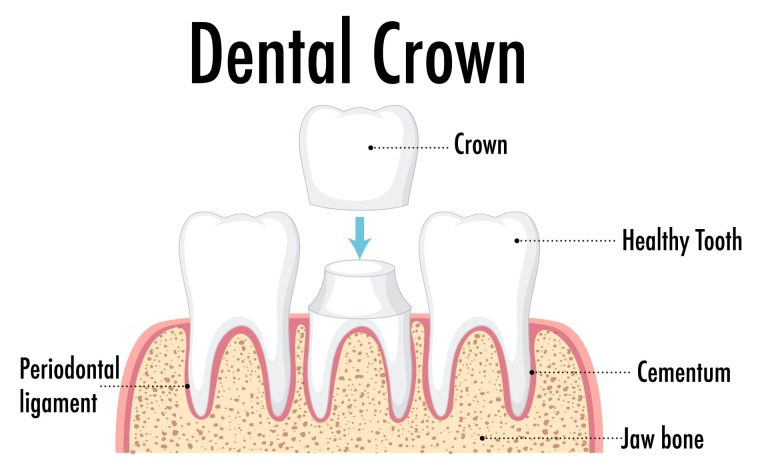
Where a tooth is heavily filled, cracked or root-treated, a crown covers the whole tooth rather than just the front. It’s a structural fix with a cosmetic result.
Invisalign and Clear Aligners
Where the issue is position rather than colour or shape, moving the teeth beats covering them. Invisalign is often the more conservative choice, because straightening your own teeth removes nothing. It takes months rather than weeks, and results need retainers afterwards to hold.
Dental Implants
For a missing tooth, an implant replaces the root as well as the visible crown, which keeps the jawbone stimulated and stops neighbouring teeth drifting.
Smile Makeovers
A smile makeover combines several of the above into one sequenced plan. The sequencing is the skilled part — gum health first, then alignment, then colour, then shape.
Why Look for a Cosmetic Dentist in East York and on the Danforth
Most people searching “cosmetic dentist Toronto” end up looking downtown by default. For cosmetic work specifically, that’s often the wrong instinct.
Cosmetic treatment is rarely one appointment. Veneers typically involve a consultation, a preparation visit, temporaries, a fitting and at least one review. Invisalign runs to monthly check-ins over the better part of a year. Bonding chips and needs a quick repair at some point. All of that is far easier when the practice is a short trip from home or work rather than across the city at rush hour.
For people living in East York, Woodbine Heights, Danforth Village, Greektown, the Upper Beaches, Greenwood–Coxwell, O’Connor–Parkview or Main and Danforth, there are practical advantages to staying local:
- Follow-up and adjustment visits stop being a half-day commitment.
- If a temporary comes loose or bonding chips, you can be seen the same week rather than waiting for a downtown slot.
- Your cosmetic dentist and your regular dentist can be the same person, so nobody is working blind on your history.
- Evening and Saturday appointments are easier to use when the clinic is on your own transit line.
Our practice sits at Woodbine and Danforth, steps from Woodbine subway station, and we offer cosmetic dentistry on the Danforth alongside general and family care. If you’re comparing options in the area, our guide to dental practices on the Danforth lists the main clinics along the strip with their current Google ratings.
What to Expect at Your Consultation

A cosmetic consultation should include an examination of your teeth and gums, X-rays where needed, photographs, a discussion of what you actually want to change, and a written plan with fees. Some practices also use digital previews or a wax mock-up so you can see the proposed shape before anything is prepared.
You should leave with options rather than a single quote, and you should never feel rushed into signing on the day. Reputable practices expect you to think about it, and many people sensibly get a second opinion before committing to irreversible work.
Keeping Your Results
Cosmetic work is an investment with a maintenance requirement:
- Brush twice daily and floss — veneers and bonding don’t decay, but the tooth underneath and the gum margin still can.
- Keep up regular checkups and cleanings so problems are caught while they’re small.
- Wear a night guard if you grind. Grinding is the most common cause of veneers and bonding failing early.
- Go easy on the things that stain — coffee, red wine, tea and smoking all dull composite bonding over time.
- If you’ve had alignment treatment, wear your retainers. Teeth drift back otherwise.
Frequently Asked Questions
Is a cosmetic dentist a specialist in Ontario?
No. Cosmetic dentistry is not a recognised specialty in Ontario. Any general dentist registered with the Royal College of Dental Surgeons of Ontario may offer cosmetic treatment, so judge a practice on training, case photos and experience with your specific procedure rather than on the label.
How much does a cosmetic dentist cost in Toronto?
It depends entirely on the treatment. In 2026, professional whitening typically runs $300 to $1,000, composite bonding $300 to $600 per tooth, porcelain veneers $1,200 to $2,500 per tooth, and Invisalign $3,000 to $8,000 for a full course.
Does insurance cover cosmetic dentistry?
Usually not when treatment is purely for appearance. The Canadian Dental Care Plan excludes whitening, veneers and cosmetic bonding, and most private plans do the same. Treatment with a functional reason, such as a crown on a cracked tooth, is often covered. Ask for a predetermination before starting.
Can I get teeth whitening if I have sensitive teeth?
Usually yes. Sensitivity is common during whitening but is generally temporary. A dentist can use lower-concentration gel, shorter sessions or a desensitising treatment first. Have the cause of the sensitivity checked before whitening, since it can point to decay, a crack or gum recession.
Are veneers a good option for me?
Veneers suit people with staining that won’t whiten, chips, worn edges or minor spacing, who have healthy gums and enough enamel. They’re a poor first choice if the real issue is alignment, if you grind heavily without a night guard, or if untreated decay or gum disease needs handling first.
How long does Invisalign treatment take?
Most courses run 6 to 18 months depending on how far the teeth need to move, with aligners worn 20 to 22 hours a day. Minor corrections can finish in a few months. Retainers are needed afterwards to hold the result.
What is the cheapest way to improve my smile?
Professional whitening is normally the least expensive meaningful change, followed by composite bonding for small chips and gaps. A scale and polish alone often makes a visible difference, and it’s worth seeing what your teeth look like clean and whitened before spending on porcelain.
Next Steps
The right cosmetic dentist for you is the one who examines your teeth properly, explains the trade-offs of each option including the cheaper ones, gives you the fees in writing, and doesn’t push you to decide on the spot.
If you’re in East York or along the Danforth and want to talk through what’s realistic for your teeth and budget, book a consultation with Dr. Samira Hossain at Woodbine & Danforth Dental Care. You’ll get an examination, a written plan and honest options — including the option of doing less.