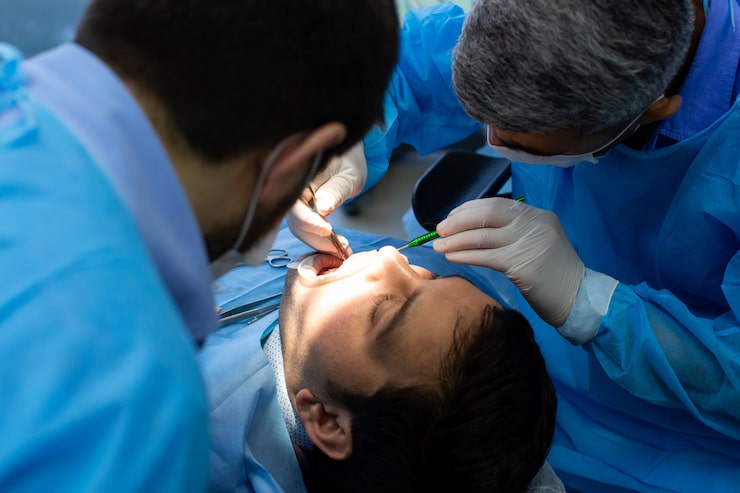
Every beautiful smile has a secret: healthy gums. Without them, your teeth can get loose, shift, or even fall out. This is where periodontics comes in. At Woodbine Danforth Dental Care, we believe that understanding gum health is not just for dentists, but it’s for anyone who wants to keep their smile for life.
That’s exactly what this guide is going to do: it will explain what periodontics is, how it works, and why it might be the key to saving your smile.

Understanding Periodontics (Basics)
Periodontics definition: A dental specialty focused on the gums and supporting structures of your teeth. It talks about how to treat gum disease, keep it from happening, and fix the damage that gum problems do.
You can think of your gums as the base of your house. If the foundation cracks, the whole house is in danger. Similarly, having gums that are fragile puts your teeth in jeopardy.
So in simple terms:
- It’s the science and art of keeping gums healthy
- It includes periodontal therapy to treat the disease
- It works to prevent periodontal disease symptoms from worsening
Why Gum Health Matters More Than You Think
According to the American Academy of Periodontology, nearly half of persons over the age of 30 exhibit symptoms of gum disease. If left untreated, gum disease can result in the loss of teeth and can have an impact on your heart, lungs, and blood sugar levels.
Periodontal Disease Symptoms To Watch For:
- Swollen or bleeding gums
- Persistent bad breath
- Loose teeth
|
Healthy Gums |
Gum Disease |
|
Pink and firm |
Red, swollen, or tender |
| No bleeding when brushing |
Bleeding after brushing or flossing |
| Teeth stay firmly in one place |
Loose or shifting teeth |
Ignoring these signs in the beginning can turn minor issues into the need for periodontal disease treatment. A process that’s more complex than simple cleaning.

Signs You Shouldn’t Ignore
Gum disease starts quickly, but here are the most common periodontal disease symptoms:
- Gum that bleeds easily
- Persistent bad taste or odor
- Receding gumline
- Tenderness or pain when chewing
If you notice these, it’s time for a gum disease treatment plan. Early care often means simpler, less invasive periodontal therapy and better long-term results.
From Gingivitis to Periodontitis: The Stages
Gum disease develops in two main stages:
|
Stages |
Description | Treatment Focus |
|
Gingivitis |
Mild inflammation, bleeding gums, and no bone loss | Improved hygiene and periodontal care |
| Periodontitis | Advanced infection, bone loss, and possible tooth loss |
Deep cleaning, advanced periodontal treatment |
Knowing how to prevent gum disease means action before the stages increase.
Your Treatment Path: How We Save Your Smile
Our periodontal treatment regimens at Woodbine Danforth Dental Care are tailored to include the following aspects:
- Diagnosis – checking for periodontal disease symptoms
- Initial cleaning – Removing plaque and tartar
- Deep cleaning – Scaling and root planning as part of periodontal therapy
- Repair – If needed, minor surgical procedures
- Maintenance – Ongoing periodontal care to keep gums healthy
The process may result in a new look for your smile, which will boost your self-esteem and comfort.
Common Treatments For Gum Disease Explained
|
Treatment |
Purpose | Recovery | Comfort |
|
Scaling and Root Planning |
Deep cleaning to remove bacteria | 1-2 days | Mild discomfort |
| Laser Therapy | Targeted gum disease removal | Same day |
Minimal pain |
|
Gum Grafting |
Restoring receded gums | 1-2 weeks | Local anesthesia |
| Guided Tissue Regeneration | Encouraging bone regrowth | Several weeks |
Moderate recovery |
The best periodontal treatment varies from patient to patient, which is why professional periodontal care matters in order to save your smile.

How to Keep Your Gums Healthy for Life
The following are some helpful suggestions for periodontal health that have been provided by our dentist at Woodbine Danforth Dental Care. These suggestions will unquestionably bring your gum health to improved levels:
- Use a soft-bristle toothbrush to brush your teeth twice a day.
- Floss at least once a day
- Visit your dentist every 6 months
- Quit smoking, it doubles your gum disease risks
- Eat a balanced diet that is rich in vitamins
To avoid dealing with periodontal disease in the future, your first line of defense is to learn how to prevent gum disease.
The Bottom Line
Your gums are the foundation of a healthy, confident smile. By understanding what periodontics is and why gum health matters, you can take the right steps to protect your teeth for life. Whether you’re dealing with early signs of gum disease or simply want to keep your smile strong, regular check-ups, good dental habits, and timely treatment make all the difference.
Protect your smile for years to come. Schedule your periodontal treatment in Toronto with Woodbine Danforth Dental Care today!
FAQs About Periodontics
What is periodontics?
Periodontics is the branch of dentistry that studies how to avoid, diagnose, and treat gum disease.
Is periodontal treatment painful?
With modern techniques, most patients experience little to no pain or discomfort during their treatment.
Can gum disease be cured completely?
For those who are still in the early stages of gum disease, it is possible to treat it with the appropriate treatment. But once it has exceeded, it can only be managed.
What is the cost of periodontal care?
Costs vary depending on the treatment you need. It is always less expensive to prevent than to repair.